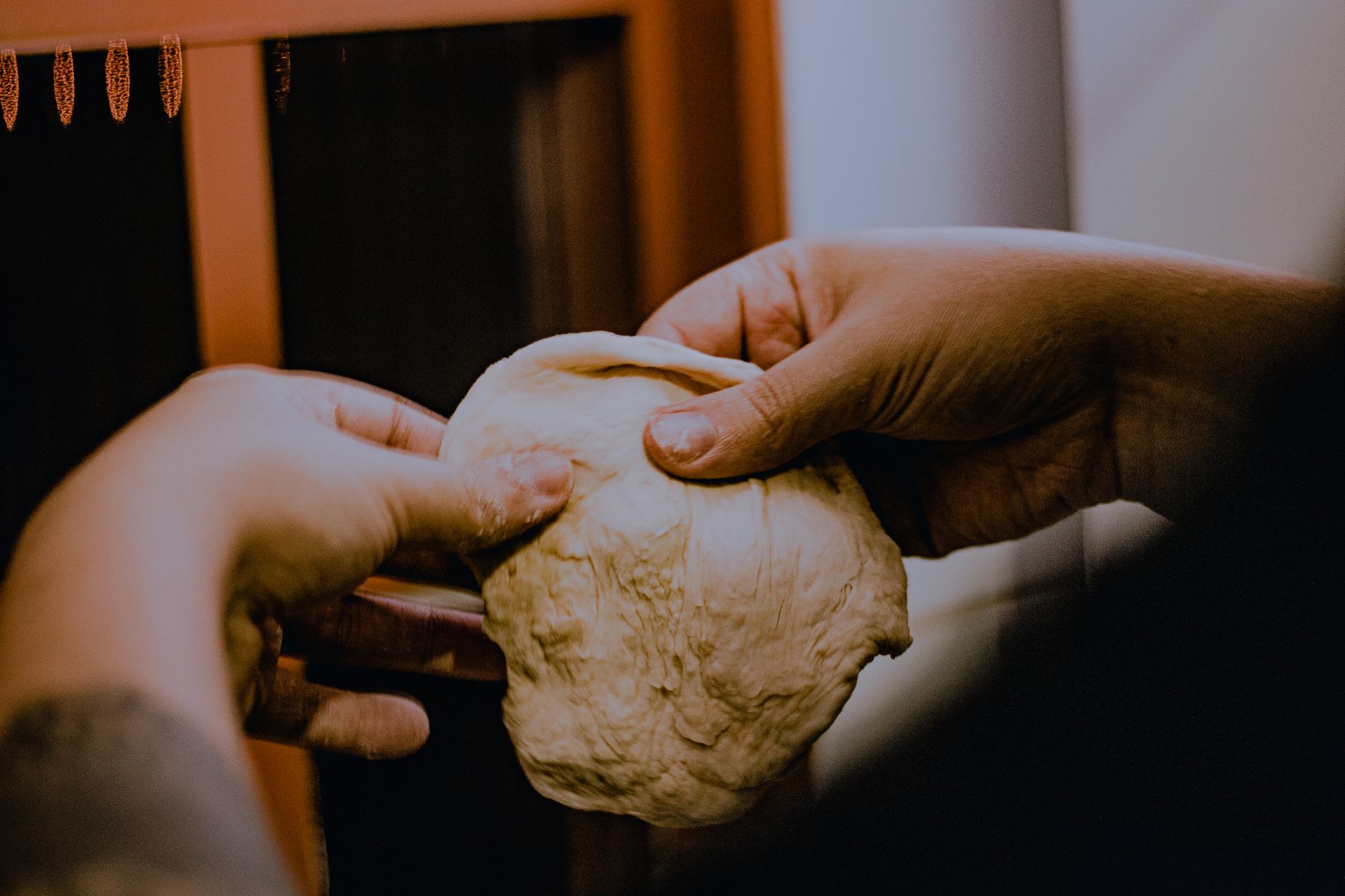
Hydration is simply the amount of water in a dough relative to the flour.
If a dough uses 1,000 grams of flour and 650 grams of water, it is 65% hydration.

The number is easy. The consequences are where it gets interesting.
More water changes handling
Higher-hydration dough is generally softer and stickier. It can feel more difficult at first because it rewards gentler handling and good fermentation.
More water can change texture
When the dough and bake are working together, higher hydration can contribute to a lighter, more open interior. But hydration alone does not create great structure.
Flour matters
Different flours absorb water differently. A hydration level that feels perfect with one flour may feel loose or dry with another.
Heat matters too
A very wet dough still has to bake through. In a home oven, the relationship between hydration, thickness, topping load, and available heat becomes important.
Do not chase a percentage
I would rather make a slightly lower-hydration dough that I can shape and launch confidently than force a fashionable number that creates frustration.
The useful question is not “what hydration is best?” It is “what hydration gives me the texture I want with the flour, fermentation, and oven I actually have?”